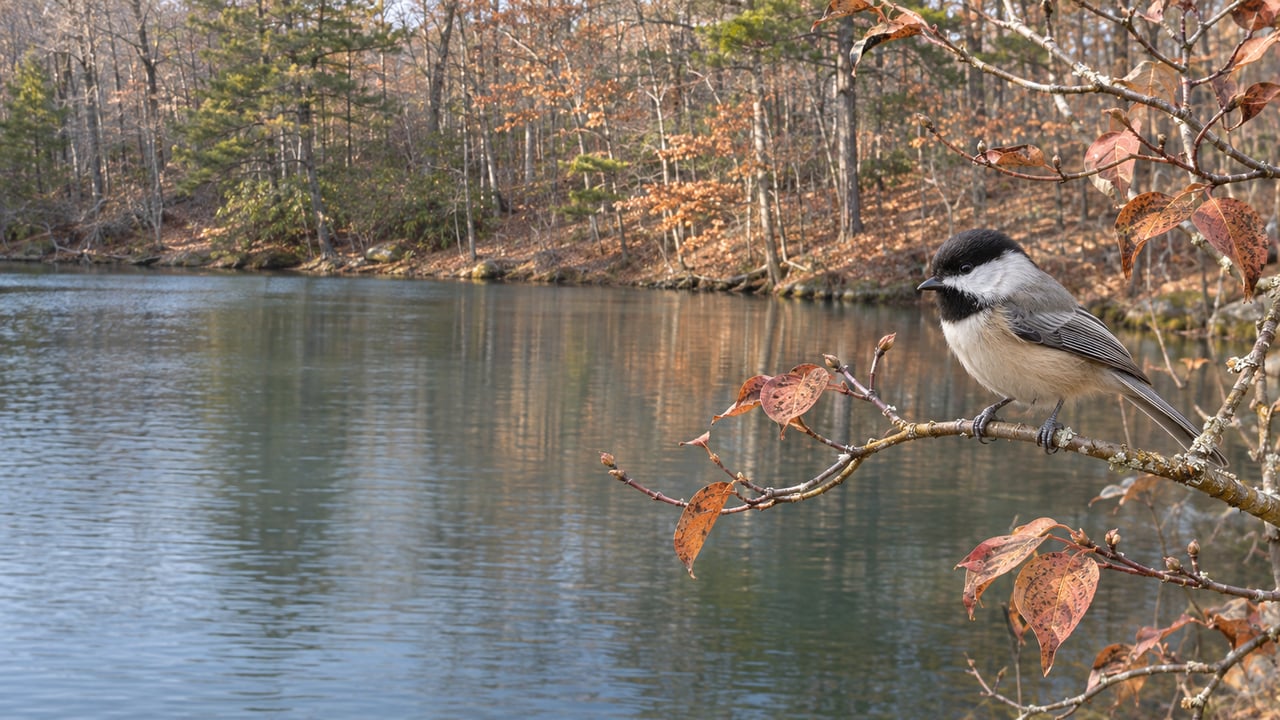
Big Canoe's feeder rule switches on with a date. Under the community's 2026 Architectural and Environmental Control Standards, bird feeders must come down on March 1 and can't go back up until November 30 has passed. Bears don't go by dates. Georgia's Wildlife Resources Division says most of the state's bears go into their winter dens sometime between late November and early January.
December 1 falls inside that den window, not after it. For the first several weeks of feeder season, a seed tube on the deck can share the woods with bears that haven't gone to sleep yet. The POA's Bear Safety page says winter feeders are "permitted" and, in the same line, "discouraged."
What the Standard Actually Says
The rule sits in the decorative-accessories section of the AEC Standards, alongside bird baths and butterfly houses. Here is Section 35.15.10 in full:
Bird feeders shall only be used during the winter months to avoid attracting bears, and shall be removed from March 1 through November 30.
The standard names its own reason, avoiding bears, and ties it to "the winter months." The community adopted these standards effective January 1, 2026. The section next to it, 35.15.5, also requires feeders, bird houses, and butterfly houses to be metal or natural wood, or painted in an approved color or stain. That's worth checking before you buy a new feeder for the season.
The community's other pages describe the window a little differently. The POA's Bear Safety page lists feeders as prohibited "March 1 - December 1" and permitted "December 1 - March 1." The visitor guidance shortens it to "Dec-Feb only."
What the Bears Are Doing in November
Bears spend fall in what biologists call hyperphagia. The Wildlife Resources Division describes it as a near-constant search for high-fat natural foods, mainly oak acorns, to build the fat they'll live on in the den. Once they're in the den, the division says, their heart rate, breathing, and body temperature drop, and they don't eat or drink until spring. They usually come out between late March and mid-April.
Every fall the division surveys acorn and hickory nut production along routes across North Georgia. Dawson Forest is one of those routes. The 2026 results, dated September 8, 2026:
| Survey area | White oak | Red oak | Chestnut oak | Total oak | Hickory |
|---|---|---|---|---|---|
| Dawson Forest | Good | Good | Poor | Good | Poor |
| North Georgia total | Good | Fair | Fair | Good | Fair |
So the natural food bears are building fat on this fall is rated Good for total oak on the Dawson Forest route, and both white and red oak came in Good there. That's the food supply a bird feeder competes with. The POA's Bear Safety page describes what happens when the competition is easy: black bears are most active from mid-March to November, "but remain active during the winter months if non-natural foods are available."
December Is the Overlap
Combine the two calendars. On December 1, the den window has only just opened, and it runs into early January. A bear that hasn't denned yet and finds sunflower seed on a Big Canoe deck has found exactly the kind of non-natural food the POA says can keep bears moving through winter. The page also explains why one find matters: "Bears learn quickly and will repeat behavior that leads to food rewards."
The page puts their appetite at up to 25,000 calories a day, about ten times what an average person eats, and says their sense of smell draws them to scents "as diverse as vinyl and citronella." Whether a feeder gets a visit depends on whether the bears nearby have gone to sleep, and nothing on the calendar tells you that.
The Black Bear Project's own seasonal reminder takes a careful tone. In her "Thankful for bears" column in Smoke Signals, Anna Witt writes that "hyperphagia continues into the fall season, with bears still actively securing as many calories as they can," and that "as winter nears, many bears will look for places to rest." Her list of reminders includes "No birdfeeders in Big Canoe until December." The same column asks residents to drive carefully across North Georgia in November "as bears continue to forage and wander."
The People Who Track This Inside the Gates
The Black Bear Project began in 2012 as a volunteer effort. In February 2026, the POA Board made it a formal advisory committee, approved its charter, and appointed Anna Witt as chair, according to Smoke Signals' February 2026 board meeting summary. The POA lists her as chairperson on its Black Bear Project committee page, which also gives her POA email for questions.
Much of the committee's work happens at places residents already use. Smoke Signals reported that the project ran BearWise mini-clinics for Beach Club lifeguards on bear behavior, how to respond when a bear appears, and how to manage food and trash. The same article said the project's "Bear Talk" pamphlet, written for Big Canoe, has been handed out at the postal facility, trailheads, kiosks, the Beach Club, the pools, and the Playfield. On October 21, Witt was the guest on a special edition of Inside the Gates Radio with host Jeff Weigl. Smoke Signals' preview said the episode would cover bear facts, Big Canoe's bear history, recent activity, and safety reminders. The project also posts updates on its Facebook page.
The Rest of the Kitchen Counts Too
In early December, a bear that's still awake will investigate anything that smells like food. The POA's household rules and the BearWise basics cover the rest of a winter routine:
- Trash goes to the compactors. Big Canoe doesn't have curbside pickup. Household garbage goes to the centralized trash facility near the North Gate, which is open 24/7 and has five household containers, one of them reserved for broken-down cardboard. Keep bags sealed inside until the run.
- Cars aren't storage. The POA says not to leave trash, groceries, coolers, or anything with an odor in a vehicle. That matters during a holiday week when the car is full of shopping.
- No food outside, locked or not. The rules specifically include food kept in a locked outdoor freezer or refrigerator.
- Grills get cleaned right away. Wash the grill and store it covered after each use. Smoke Signals' bear coverage also suggests burning off grease after cooking.
- Pets eat indoors. Store pet food inside and don't leave bones or treats in the yard. Witt's column also asks that dogs stay leashed.
- Building sites have their own rule. The 2026 AEC Standards require at least one portable bear-proof waste container on every construction site, under Section 65.10.20.
The POA's visitor rules prohibit feeding wildlife and list a $5,000 fine for violations.
If a bear does come through, the Bear Safety page's guidance is to stay calm, give it plenty of room, and bring children and pets inside. Once the bear has a clear way out, make plenty of noise so it doesn't feel at home in the backyard. Most of the time, the page says, the bear is just passing through and will keep going if it doesn't find food.
This post summarizes community rules as general information and isn't legal advice. The POA and the AEC office have the final word on how a standard applies to your property.
At North GA Properties, Carolyn and Tom keep the AEC Standards close at hand because, in Big Canoe, rules like the feeder dates are part of everyday life.