If you have spent an afternoon on the portals comparing gated mountain communities north of Atlanta, you have probably concluded that Bent Tree and Big Canoe are close cousins with slightly different price tags. That read is almost right, and it is the part that is wrong that costs buyers the most.
The single decision that flips which community is cheaper for you has nothing to do with the list price of the house. It has to do with whether you plan to golf, which villa sits on top of the main property owners association, and whether the lot you are eyeing already has a valid soil test in the file.
The dues comparison the portals do not run
Bent Tree's annual POA dues run in the neighborhood of $2,400 and bundle gated security, road maintenance, and upkeep of the 110-acre Lake Tamarack, the 18-hole course, pools, tennis and pickleball courts, and the stables. Golf membership is included in that number, not billed as an add-on.
Big Canoe is structured differently. The 2026 Amenity Membership Provisions describe an à la carte system where property owners choose which amenities to join, and golf carries its own reinstatement fee of $2,400 for a full membership or $1,662 for an individual, in addition to base POA obligations that historically run in the low-$200s per month for lot owners plus a one-time initiation at certificate of occupancy. Big Canoe's own membership page is explicit that all amenities are à la carte and residents "may elect to become a member or simply pay as you play."
Here is what that looks like side by side for a golfing household:
| Cost component | Bent Tree | Big Canoe |
|---|---|---|
| Base POA dues | ~$2,400/year, bundled | Separate monthly dues plus initiation at CO |
| Golf access | Included | Separate amenity membership |
| Golf reinstatement (if lapsed) | N/A, part of dues | $2,400 full / $1,662 individual |
| Model | All-in | Pick your amenities |
If you never touch a club, Big Canoe's à la carte structure can be the cheaper long-term arrangement. If you play weekly, the math inverts. That is the mechanism the median-price comparison hides.
Why one Bent Tree listing shows $21 in monthly HOA and the next shows over $4,000
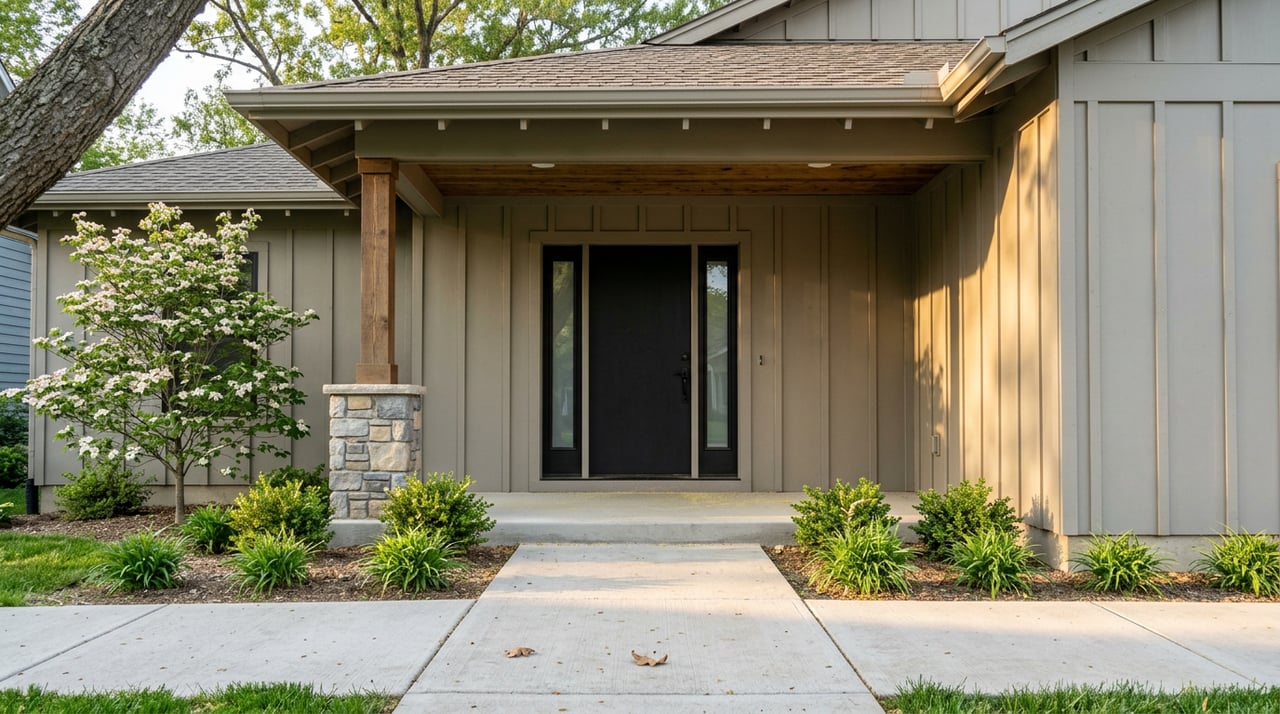
Open the Bent Tree section of a national portal and the HOA fees on active listings range from $21 to $4,063 per month. That is not a data error. Bent Tree is a large community with sub-associations inside it, and the villa communities carry their own monthly dues on top of the master POA. The Bent Tree Villas HOA, for example, published 2024 dues of $40.95 per month, with specific exterior paint colors mandated (Sherwin Williams 7722 Travertine) and no fences allowed beyond two approved privacy panels.
A single-family owner on a wooded lot pays the master POA and nothing more. A villa owner pays the master POA plus a villa assessment, plus lives under a tighter set of architectural rules. Both are technically "in Bent Tree." Both show up under the same neighborhood filter. The transaction friction is that a buyer touring both in one weekend needs to ask, for every property, which sub-association it belongs to and what its current assessment is. That question does not appear on the MLS sheet.
The community operates debt-free per its own materials, with roughly 65 percent of the 1,100 homes owner-occupied year round. That matters when you compare reserve health to communities carrying long-term obligations.
The lot inventory is where the real story lives
There are 46 lots for sale inside Bent Tree at an average list price of $28,284 as of early 2026 per FMLS-fed inventory data. That is not a typo. In a market where a finished home averages a $485,000 sale price with a 20.1 percent year-over-year gain through the spring 2026 window per Redfin's neighborhood report, you can buy raw land inside the same gate for the price of a moderately optioned SUV.
The catch is the reason those lots are cheap. Mountain lots in Pickens County carry three costs the flat-lot buyer never thinks about:
- Soil testing. A percolation test on a wooded, sloped North Georgia lot runs meaningfully more than the flat-lot national average of roughly $1,300, because access difficulty and slope both push cost. Angi's 2026 data puts the range at $750 to $3,000, with the upper end typical when an excavator cannot easily reach the drain field location.
- Architectural Control Committee approval. Bent Tree's ACC reviews new and ongoing construction for covenant compliance before a shovel goes in the ground.
- Site work. Retaining walls, driveway cuts, and mound or engineered septic systems on rocky mountain soil are the line items that turn a $28,000 lot into a project.
One current listing in the community advertises that a soil test was completed in February 2026. That single sentence in the MLS remarks can be worth several thousand dollars and several months of due diligence to a buyer who is ready to build. Lots that have already passed a valid perc test, have a defined building envelope, and sit on a paved road inside the gate are a fundamentally different asset from a $28,000 raw parcel, even when the tax-assessor comps look identical.
What 148 days on market actually means here
Redfin's Bent Tree feed shows a median 148 days on market for active listings and roughly 3.1 percent under list on completed sales, against that $485,000 average sale price. In a suburban Atlanta subdivision, 148 days would signal a stalled market. In a second-home mountain community with a wide product mix, it signals something different.
Bent Tree's inventory spans A-frame cabins in the $300,000s, mid-market golf-course and lake-view homes in the $400,000s to $700,000s, and larger custom estates above that. Second-home and retirement buyers move slower than primary-residence buyers. They fly in, tour, fly home, think, and come back. A well-priced, well-presented home in the mid-tier still moves. A quirky floor plan on a difficult lot sits.
The practical read for a buyer: do not treat time on market as a proxy for negotiability without looking at which slice of the mix the home falls into. And for a seller: the median hides a wide distribution, and the homes that sit are usually the ones priced against the tier above their actual specification.
The named amenities that anchor the value
The amenity list that supports the $2,400 all-in dues is specific and worth knowing by name. Lake Tamarack is 110 acres and 85 feet deep, stocked annually with trout in addition to native bass, with a permit required to use the lake and jet skis and motorized boats allowed. The 18-hole course, the tennis and pickleball courts, the equestrian stables, the pools, Club Tamarack, the on-site restaurant and Tavern, hiking trails, the dog park, and RV and boat storage all sit inside the 3,500-acre gate. Mt. Oglethorpe, the highest of the four peaks that ring the community at 3,300 feet, is the former southern terminus of the Appalachian Trail. Piedmont Mountainside Hospital sits down the mountain in Jasper.
That is the value stack the bundled dues are protecting. When you compare Bent Tree's dues to a community with lower headline fees but à la carte pricing on each of those elements, run your own household's actual usage through the math before you decide which is cheaper.
FAQ
Do Bent Tree's dues include golf? The master POA dues include access to the course as part of the bundle, which is a different structure from communities that treat golf as a separate paid membership. Confirm the current dues and inclusions in writing for the specific property before you write an offer, because fee structures do change.
Why do two Bent Tree listings show wildly different HOA numbers? The community contains sub-associations, including villa communities with their own monthly dues layered on top of the master POA. The MLS field shows the total the buyer will pay, but does not always break out which portion is the master and which is the villa or sub-association.
Is a $28,000 lot in Bent Tree really buildable? Sometimes yes, sometimes no. The purchase price is the smallest line in the build budget. Ask for the current soil test, confirm the building envelope with the Architectural Control Committee, get a real site-work estimate from a builder who works inside the gate, and read the covenants before you tie up your money.
How does Bent Tree compare to Big Canoe on total cost? It depends on how you plan to use the amenities. Bent Tree's bundled structure favors households who will use the golf course. Big Canoe's à la carte structure can favor households who will not. Neither is universally cheaper.
Before you write the offer
Every gated mountain community north of Atlanta has a story the portals cannot tell. The dues bundle, the sub-association layer, and the buildability of a specific lot are the three questions that decide whether you got a good deal, and they are questions that only get answered by someone who has walked the community, read the covenants, and worked with buyers on both sides of the fence.
If you are weighing Bent Tree against Big Canoe or any of the other North Georgia mountain communities, Thomas Petrigliano and Carolyn Littell can walk you through the specific math on the specific property, at your pace, before you sign anything.
Start Your Home Search