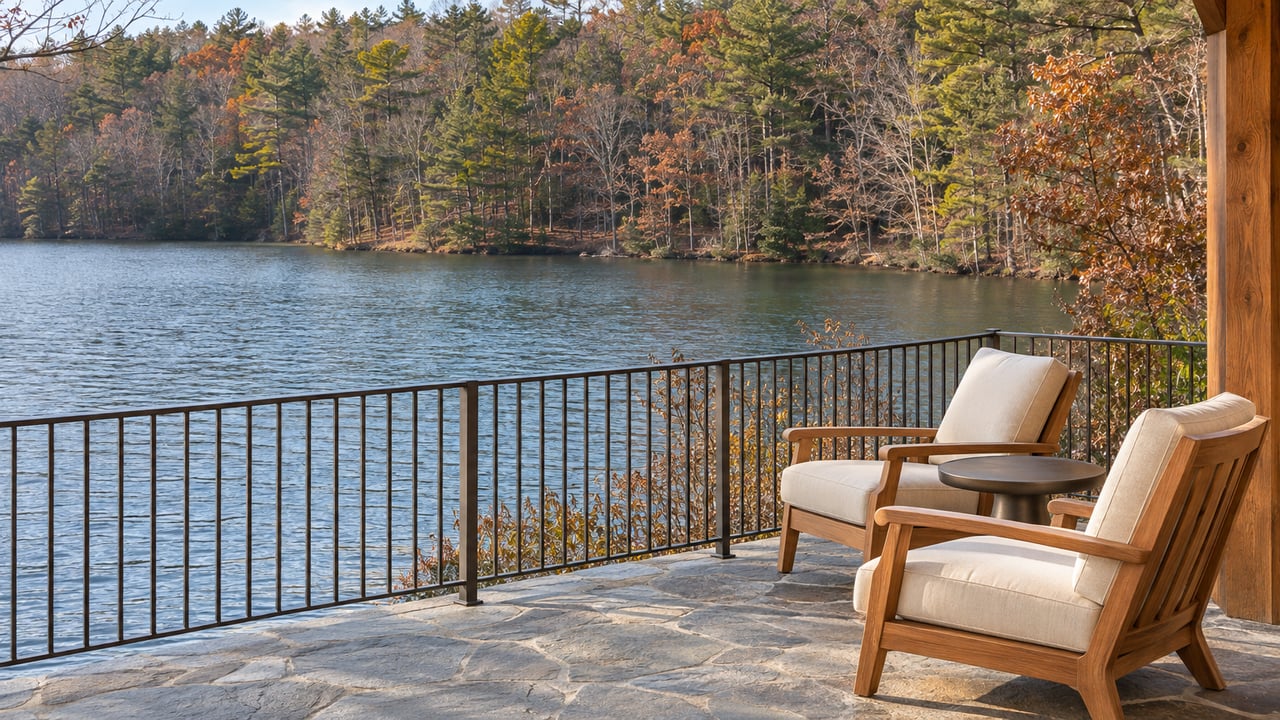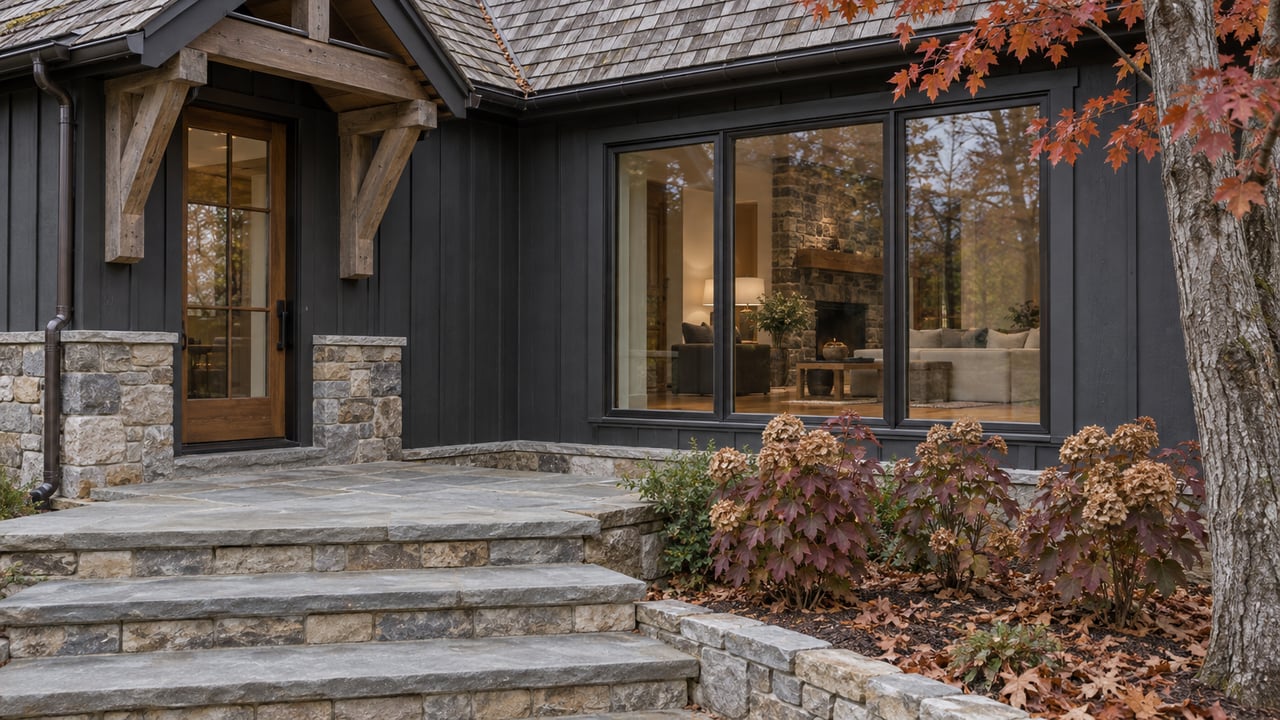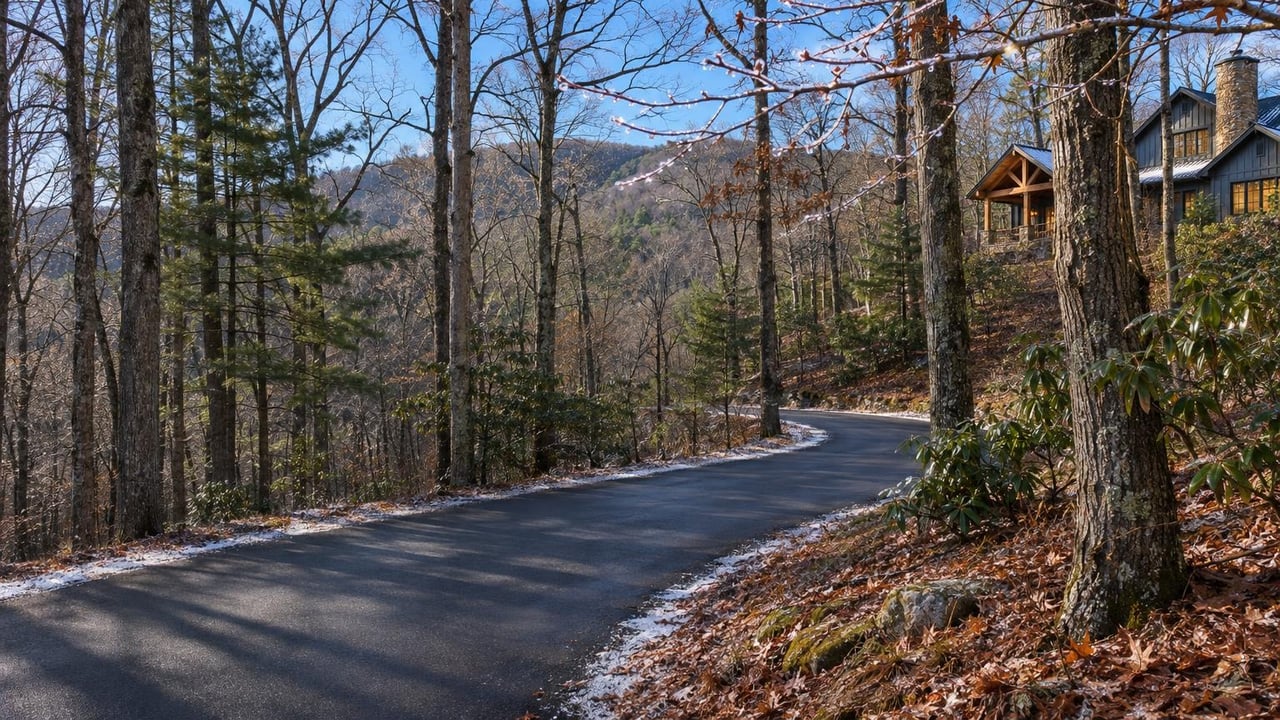
Early on the Sunday of Winter Storm Fern last January, three Big Canoe volunteer firefighters walked to the fire station in single-digit temperatures. They started from Ridgeview Drive, Huckleberry and McElroy Mountain. They walked because the roads were too icy to drive, and the department needed hands. The department's Director of Volunteers described the walk in a letter to Smoke Signals. The same letter says twelve volunteers logged 306 hours during that ice storm. Ten more logged 148 hours during the snow event that followed a week later.
Both storms brought less than the forecasts called for. The letter says the roads still showed it: "the steep and narrow mountain roads don't react all that well to even reduced amounts of frozen precipitation." In a place built on those roads, much of the plan for ice comes down to timing. The road crew decides when to treat and when to plow. For residents, the decision is when to drive, and the right answer is often later than the pavement suggests.
The Planning Starts Four Days Out
The visible part of a Big Canoe storm is the brine truck and the plow. The work starts well before either one goes out. Ahead of each of the two January storms, POA staff held daily meetings beginning four days out and planned for a range of worst cases. Some POA, Public Works and Public Safety staff who live outside Big Canoe were housed on the property. They worked shifts of 12 hours or more, staffing the gates, plowing and salting roads, and handling infrastructure problems as the weather came in.
The fire department prepares its trucks in the same window. Engines and rescue vehicles were fitted with chains, and support vehicles got studded tires, because emergency calls keep coming in bad weather. The preparation explains a line on the POA's Weather Event Procedures page. If a Public Safety vehicle is moving easily on a snowy road, that is likely because it has heavy-duty chains or tracks. The POA tells residents not to follow one unless they are told to.
The Day Before Is Brine Day
The first treatment goes down before anything freezes. According to Smoke Signals' winter-preparation coverage, Public Safety salts the roads when icy conditions are forecast for the next day. Fern hit North Georgia on Saturday, January 24, 2026, and Big Canoe brined its roads that Friday.
Brining is also on the POA's regular fall calendar. At the November 2025 board meeting, Smoke Signals reported that the year's road striping, reflector work and roadway touch-ups were set to finish before winter road brining began. A brine truck on your road on a clear, cold afternoon is a forecast in itself. The crew expects ice by the next morning.
Why the Plows Hold Back
During a storm, people often expect to see the plows out early, and in Big Canoe that would backfire. The POA says the community has a large fleet of road-clearing equipment. It also says that because of the elevation and temperatures, roads plowed and cleared too soon develop an icy film that refreezes into black ice. A road scraped at the wrong hour ends up more dangerous than one left alone a little longer. The same page asks residents to "please be patient."
The same refreeze problem is why the POA tells residents to avoid travel "even when roads appear clear." The page calls black ice on Big Canoe's hills a nearly invisible hazard. A plowed road that looks dark and wet is the condition the warning describes. It does not mean the road is safe to drive.
Smoke Signals published a Public Safety account from a morning when snow and ice covered the community's roads. Public Safety got three separate accident calls soon after the roads iced over. Units staging at Station 3 responded. The first vehicle had overturned down an embankment, and everyone in it got out safely and asked only for a ride home. Everyone in the other two vehicles was also safe. Several wrecked or abandoned vehicles stayed off the roadways until conditions improved enough for tow services to respond. A car that slides off a Big Canoe road can sit there until the thaw, because the tow trucks face the same ice as everyone else.
Rain at the North Gate, Snow on Cox Mountain Drive
The timing problem changes with elevation. The POA's procedures page says the community's rapid elevation changes make some areas colder than others: "While it may be raining at the North Gate, it could be snowing on Cox Mountain Drive." Conditions at the gate do not tell you what your own road is doing. A road that has thawed near the entrance can still be frozen higher up, and the reverse can be true when you head home.
For the same reason, the POA's advice to anyone stranded inside the gates is to find a nearby home to wait in. Public Safety will try to reach people stuck in a bad spot, but the POA says it can't promise a quick arrival when conditions are the problem. During Fern, Smoke Signals reported that neighbors offered their homes to anyone who lost power, along with firewood and updates on road conditions.
What Closes, What Opens, and Who Gets Through the Gate
Before the January 2025 storm, Big Canoe officials forecast 7 inches of snow. They asked property owners to finish preparing and plan to be home for 72 hours starting no later than Thursday afternoon. They expected travel to be difficult from Friday, January 10, through Monday, January 13. Their notice warned that residents might be able to leave Friday morning but not get back that afternoon. It also warned that contractors and guests might not be allowed through the gates if the storm hit the roads hard. When an ice forecast comes in, plan around that warning. A cleaning crew, a contractor or holiday guests due during a storm may not get through the gate.
The Clubhouse changes roles too. During the January 2026 storms, it was closed to the public while the kitchen kept cooks on duty. They made hot meals for Public Works and Public Safety crews and stood ready in case the building had to become a shelter. During Fern, the Clubhouse's Overlook Room did open as an emergency shelter on Sunday for residents who had lost power. Volunteers at BCAR, Big Canoe's animal rescue, also kept coming in. Some walked to and from BCAR in the storm.
Smoke Signals reported that trees fell and blocked roads during Fern, but most Big Canoe residents kept their power. The wider Amicalola EMC system had more trouble. The co-op's January 25, 2026 update reported 2,700 members without power at noon that day, and 2,164 still out at 5:30 p.m. That evening count included 620 members in Dawson County and 109 in Pickens County. If your power goes out, the POA directs you to the Amicalola EMC outage map. If your area isn't shown, call the co-op at 706-253-0359.
The First Call Comes From the County
The first official word about a storm will probably not come from the POA. The procedures page says county emergency management takes the lead in notifying property owners. Big Canoe Public Safety is described as "a support organization for the County's leadership," and Big Canoe Communications re-sends the county's messages through its own channels. Big Canoe sits across two counties, so which alert system you need depends on your address. Pickens County residents can sign up for free phone, text or email alerts through Pickens County Alerts. Dawson County uses Rave Alert, and you sign up by emailing Lucas Ray, the county's EMS Logistics Officer and Deputy EMA Director, with your name, email and phone number.
Inside the gates, POA email goes to the address and phone number in your owner profile. If those emails stopped arriving, the POA's ASKTHEPOA form is how you update them. The POA also posts on its official Facebook and Instagram accounts under @bigcanoeevents&happenings.
Late November is a good time to check all of this, before the first brine truck of the season comes up your road. Sign up for your county's alerts and confirm your POA email works. Then go by the forecast, not by how the pavement looks. If the crews brined the day before, they expect ice. If the plows haven't come yet, they are probably waiting until clearing won't refreeze. When it's raining at the North Gate, assume the roads higher up may be frozen.
In Big Canoe, a street's elevation and slope shape what its winter mornings look like, and the difference between the North Gate and Cox Mountain Drive is one example. If you're weighing a particular road or lot in the community and want to talk through how its location fits the way you live year-round, the team at North GA Properties is glad to help. When you're ready, Start Your Home Search.