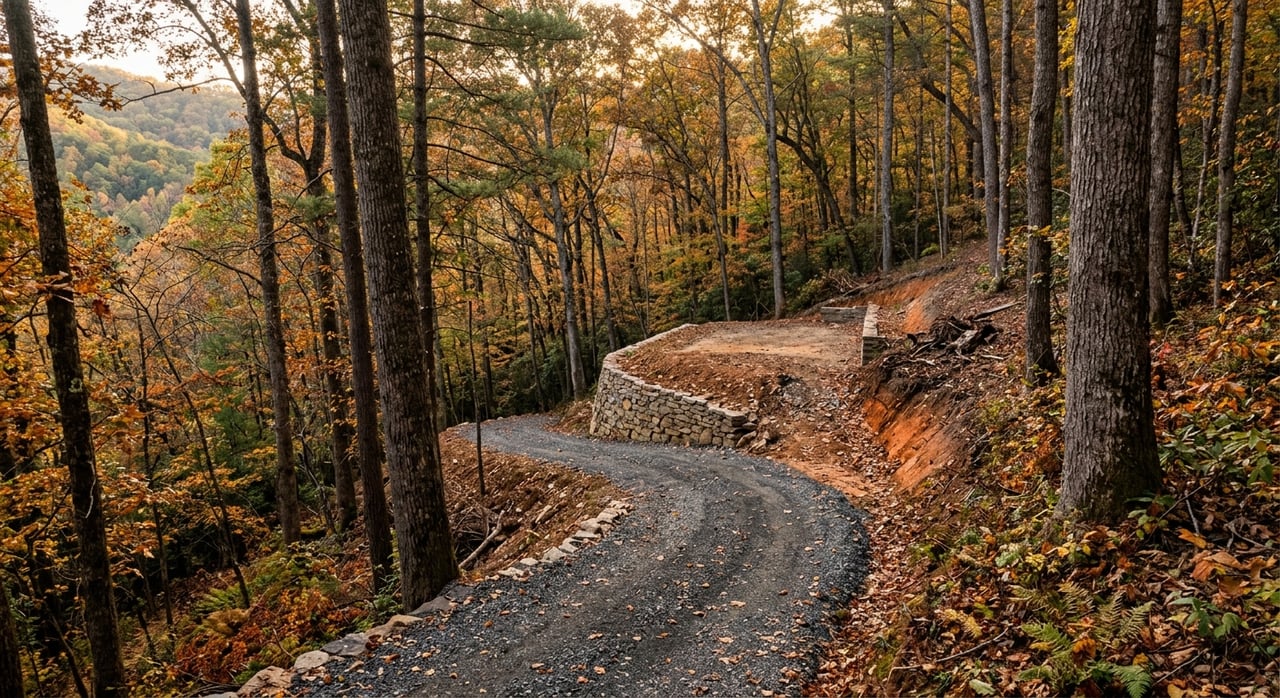
Wondering whether a Big Canoe lot is truly buildable, or just beautiful on paper? That is one of the most important questions you can ask before you buy. In Big Canoe, the right lot can support your plans well, while the wrong one can add cost, delays, and design compromises. This guide will help you evaluate a lot with more confidence, so you can understand the rules, spot the real cost drivers, and ask better questions before you build. Let’s dive in.
Start With Big Canoe Rules
Before you focus on views or house plans, start with the rules that shape what can happen on the lot. Big Canoe is governed by its Property Owners Association, and the community’s standards play a major role in how a homesite can be designed and improved.
A key point to know is that you cannot disturb a lot beyond flagging and staking until the AECD approves the site plan and architectural drawings. That means early due diligence matters. If you buy first and evaluate later, you may discover that your preferred home design does not fit the lot as easily as expected.
The required site plan must show topography, property boundaries, setbacks, drainage, clearing limits, and septic fields or drain fields where applicable. Residential guidelines can also vary by neighborhood and lot number, so one lot may allow different features than another. In Big Canoe, lot evaluation is never one size fits all.
Check County Permit Needs Early
In Pickens County, permits must be obtained before construction begins. If the lot will use septic, the county requires a septic permit or authorization form before a building permit can be issued.
If the driveway connects to a county road, you may also need an access-encroachment permit. For larger projects, a land disturbance permit is required before work begins if more than 1 acre will be disturbed. Floodplain and trout-stream buffer rules may also apply, depending on the property.
These county requirements affect timing, cost, and even lot suitability. A lot that seems straightforward can become more complex if access, drainage, or environmental conditions need additional review.
Study the Slope First
In Big Canoe, slope is one of the biggest factors in lot buildability. The community requires a topographical survey with minimum two-foot intervals, and the site plan must show how the house and garage will sit on the land.
The standards also say the home should parallel the contours of the land as much as possible. That matters because steep terrain can increase grading needs, wall requirements, drainage work, and foundation costs.
When you walk a lot, try to think beyond the trees and imagine where the driveway starts, where the garage lands, and where the main living spaces will sit. A dramatic lot can be a great fit, but only if the site work and design approach match your budget and goals.
Understand the Build Envelope
A lot may look large, but the usable build area can be much smaller once setbacks and buffers are applied. In Big Canoe, the garage setback is 30 feet from the edge of road pavement, and the house setback is 40 feet.
There is also a 10-foot side buffer that must remain undisturbed. On a smaller lot or a lot with challenging topography, those rules can narrow the build envelope more than buyers expect.
This is why a rough “it should fit” assumption is risky. You want to know where the home can realistically go, how much outdoor area remains, and whether the lot supports the floor plan you have in mind.
Evaluate the Driveway Carefully
In mountain communities, driveway design can be just as important as the house location. In Big Canoe, driveway grade cannot exceed 25%, the maximum width is 12 feet, and the street flare cannot exceed 20 feet.
If a driveway interrupts drainage, at least 20 feet of pipe is required. Driveways with more than one curb cut are only allowed in certain neighborhoods and are discouraged due to drainage and environmental impact.
From a practical standpoint, this means driveway feasibility can affect both budget and design. A lot with a long, steep, or complicated driveway may cost much more to improve than a lot with simpler access.
If the parcel fronts a county or public road, Pickens County’s access-encroachment review may also come into play. That review looks at details like the access point, drainage within 500 feet, sight distance, driveway width, alignment, and surface.
Think About House Orientation
Orientation is not just about the view. It can also affect comfort and energy use once the home is built.
According to the U.S. Department of Energy, south-facing windows can bring in more winter sunlight, north-facing windows tend to provide more even natural light, and east- and west-facing windows can increase heat gain. On a Big Canoe lot, that means the ideal house position may balance scenery, natural light, and seasonal comfort.
A strong lot evaluation should consider where the main windows, decks, and outdoor spaces will face. That can make a real difference in how the home lives day to day.
Treat Trees and Clearing as Real Costs
One of the most common mistakes buyers make is assuming they can clear more than the community allows. In Big Canoe, clearing limits are tightly controlled and must be marked and verified during site inspection before any clearing begins.
The standards cap clearing at 10 feet beyond the building footprint, 3 feet beyond approved driveway paving, and 1 foot beyond walkways. That means your usable open area may be more limited than it appears during a first visit.
Tree removal is also regulated. Trees 6 inches and larger, flowering trees, and evergreens generally require written POA approval before removal unless they fall within limited exceptions for building or driveway right-of-way.
Unauthorized tree removal or pruning can lead to substantial fines. Depending on the location and type of violation, fines can be $1,000, $500, or $3,000 per tree or shrub.
Be Realistic About View Potential
A lot with a seasonal or long-range view may still need careful review before you assume that view can be opened up. Big Canoe regulates view-related tree work, and thinning requests for evergreen trees must be submitted in writing.
The standards also include guidance for vista pruning and spacing for thinning deciduous trees. In addition, maintenance is required within a 75-foot road corridor.
In other words, “view potential” should never be treated as a free bonus. It may be possible to improve a view within community rules, but that work is regulated and should be evaluated early.
Confirm Utility Service
Utility access is another major part of lot evaluation. Big Canoe identifies Utilities, Inc. of Georgia for water and sewage, Amicalola Electric Membership Corporation for electric service, Windstream Internet and a TDSTELECOM telecom listing for communications, and Blossman Gas for propane service.
The AEC Standards require underground utility connections, and utility deposits, fees, and service are the owner’s responsibility. That means utility availability is only part of the picture. You also want to understand connection logistics and likely setup costs.
If the lot will use septic instead of sewer, septic tank and drain field locations must be identified, county approval is required before construction, and the county health department must inspect before backfilling. Verifying whether the parcel is served by sewer or septic should happen early in your decision process.
Factor in Landscaping From Day One
The cost to build does not stop with the house and driveway. In Big Canoe, initial landscape plans for new homes must be approved before landscaping begins, and invasive plants are prohibited.
That matters because landscaping is part of how the site functions and looks long term. On a sloped homesite, landscape planning may also tie into drainage, erosion control, and the finished feel of the property.
When comparing lots, it helps to think in terms of total site development cost rather than just land price. A less expensive lot can become more expensive overall if the site work is more involved.
Visit the Lot in Person
Big Canoe specifically notes that GPS can be unreliable and that Google Maps is the most accurate digital option. Even so, nothing replaces seeing the lot in person.
A site visit helps you evaluate road approach, driveway path, slope changes, tree density, and the real route to the amenities you expect to use most. Big Canoe includes golf, the Wellness Center, the Marina on Lake Petit, outdoor aquatics, racquet sports, bocce, fishing, and 25 miles of hiking trails.
If daily convenience matters to you, verify the actual drive to those places rather than relying on a map pin. Two lots may look similar online but feel very different once you drive them.
Bring in the Right Professionals
A smart lot purchase usually starts with the right team. Big Canoe requires a site plan prepared by a Georgia-registered architect, civil engineer, or land surveyor unless that requirement is waived case by case by the AECD manager.
That requirement alone tells you how important professional review is in this market. Lot decisions in Big Canoe often come down to details that are hard to judge from photos or a casual walk-through.
It is also important to know that no occupancy is allowed until an AECD occupancy permit is issued. Pickens County also requires final Environmental Health approval before permanent power is released. That makes early planning essential, especially if you are hoping for a smoother build timeline.
What a Smart Lot Review Includes
Before you commit to a Big Canoe lot, try to answer these questions:
- Does the build envelope support the size and style of home you want?
- How steep is the site, and how much grading may be needed?
- Is the driveway feasible under Big Canoe standards?
- Will the lot use sewer or septic, and where would the drain field go if needed?
- Are there drainage, floodplain, trout-stream buffer, or access issues to review?
- How much clearing is allowed, and what tree work would require approval?
- Is the view current, seasonal, or only potential?
- How close is the lot to the amenities you plan to use most?
- What professionals should review the lot before you move forward?
The goal is not to find a perfect lot on paper. The goal is to find a lot that fits your vision, your budget, and the realities of building in Big Canoe.
If you are comparing lots in Big Canoe, having a local guide can save you time, help you ask sharper questions, and keep you from overlooking costs that are easy to miss early on. When you are ready to evaluate land, new construction options, or existing homes in the community, reach out to Thomas Petrigliano for practical guidance rooted in real Big Canoe experience.
FAQs
What should you check first before buying a Big Canoe lot?
- Start with Big Canoe’s POA and AEC rules, then confirm county permit needs, setbacks, slope, driveway feasibility, and utility service.
How do Big Canoe driveway rules affect lot selection?
- Driveway grade cannot exceed 25%, width is limited to 12 feet, and certain drainage and curb-cut rules apply, which can directly affect design and cost.
Why does slope matter when evaluating a Big Canoe homesite?
- Slope affects grading, drainage, foundation design, driveway layout, and how easily a home can fit the lot within community standards.
Can you clear trees to improve a view on a Big Canoe lot?
- Tree clearing and view-related pruning are regulated, and many removals require written POA approval before work begins.
How do you know if a Big Canoe lot uses sewer or septic?
- You should verify utility service early, because some lots may require septic review, drain field identification, and county approval before construction.
Why is an in-person visit important for a Big Canoe lot?
- A site visit helps you assess real slope, road access, driveway path, tree density, and travel time to the amenities you expect to use most.