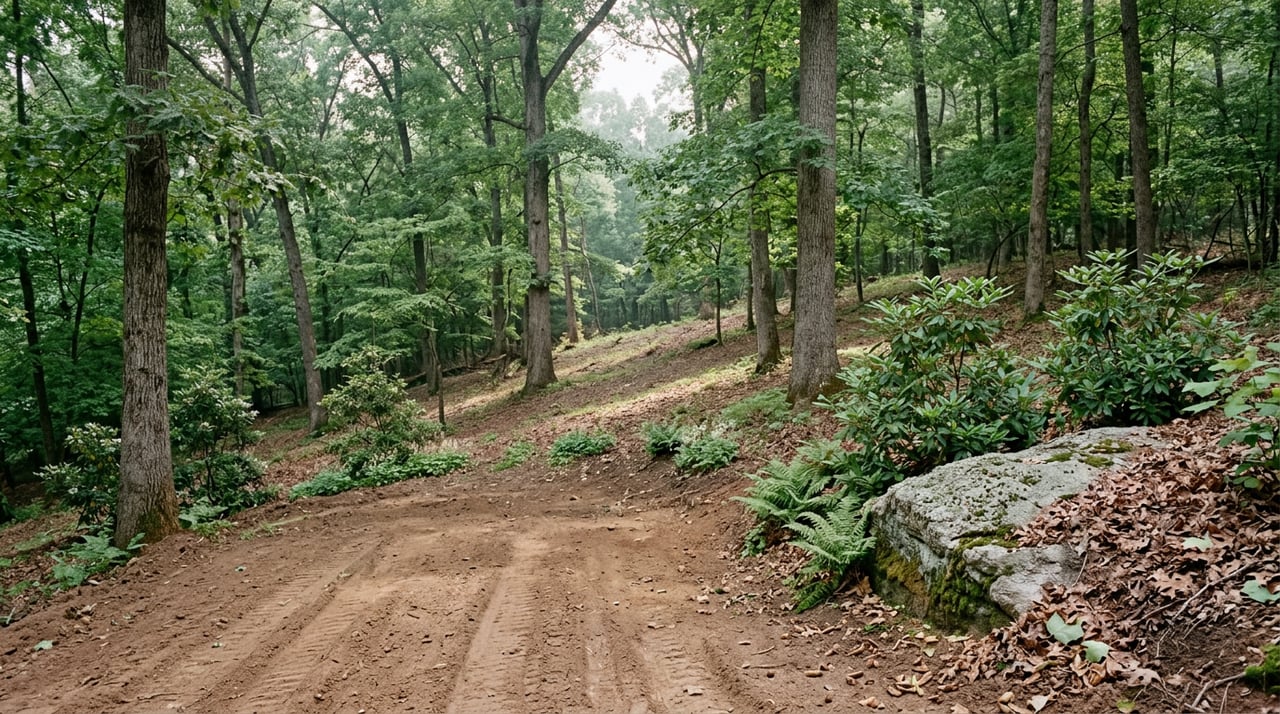
Two buyers walk into Big Canoe on the same weekend. One puts a contract on a wooded interior lot for $22,000. The other pays $85,000 for a lot with a long-range mountain view three streets over. A year later, the buyer who paid less has spent more, because the lot he bought had rock close to the surface and needed an engineered septic system before a builder could even pull a permit. The buyer who paid more had a passed Level 3 soil test already on file and broke ground within weeks.
This is not a fluke. It is how raw land works in a mountain community where topography, not acreage, decides most of your budget. If you are shopping for a lot in Big Canoe with a home eventually in mind, the number on the sign is the least useful piece of information you will get. What matters is buried, literally, in the soil.
What the Price Actually Reflects
Listings for land in Big Canoe run a wide range. Interior or sloped lots typically start around $15,000 to $30,000, while premium view lots, lakefront parcels, and sites close to golf and club amenities can run $100,000 or more. That spread mostly tracks the things a buyer can see standing on the property: elevation, distance to the gates, proximity to Lake Petit or a fairway, whether the trees open up to a long view or close in around you.
None of those things determine whether the lot can support a house. The one factor that does, soil suitability for a septic system, rarely shows up in the listing price at all. A cheap interior lot with poor percolation can end up costing more to build on than an expensive view lot that already has clean paperwork.
Why Georgia Sizes Septic by Bedrooms, Not Square Feet
Big Canoe sits outside any municipal sewer system, so every home runs on an individual septic system regulated under Georgia's statewide rules. The state's own guidance sets a minimum 1,000-gallon tank for a home with one to four bedrooms, adds 250 gallons of capacity for each bedroom beyond four, and requires a tank 50 percent larger if the home will have a garbage disposal.
That detail matters more than it sounds like it should. It means the cost of your septic system is tied to how many bedrooms you plan to build, not how many square feet the house covers. A four-bedroom cottage and a four-bedroom lodge with twice the floor area need the same base tank capacity. What changes the price is the soil underneath, not the blueprint on top of it. On a lot with dense rock or a high water table, that same required capacity can mean an engineered system instead of a standard gravity-fed one, and that difference in engineering is where most of the surprise cost hides.
What "Unbuildable" Actually Means Here
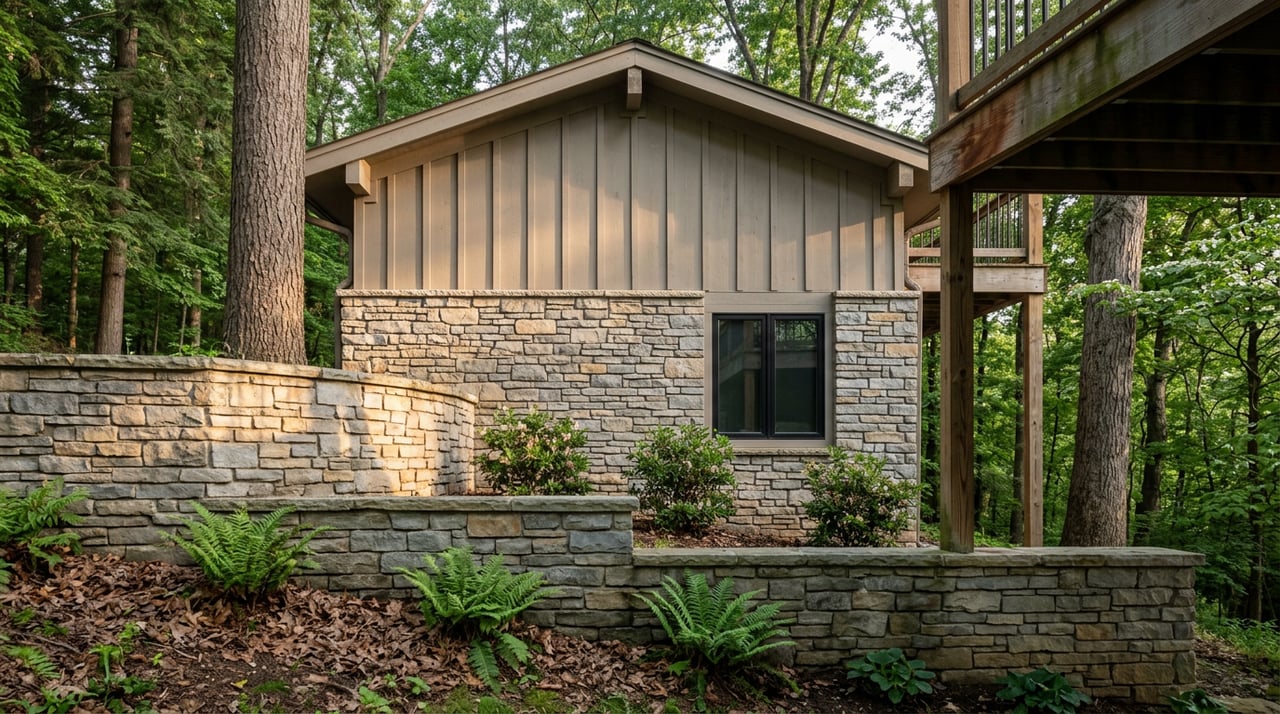
Big Canoe's own governing rules define this in stark terms. Under the POA's current policies, a lot is officially designated "Unbuildable" when it cannot support septic system requirements as defined in the community's Declaration, and a "Buildable Lot" is simply any lot that has not been designated Unbuildable. There is no separate category for lots that are buildable but expensive to build on. A lot either clears that septic bar or it does not, and everything else, the grading, the driveway length, the retaining walls a steep site might require, sits entirely outside that designation.
This is also why owners of adjoining unbuildable and buildable lots sometimes combine them rather than build on either alone. The POA allows it, but the property owner requesting the combination pays a $1,000 administrative fee and takes on the accumulated assessments the unbuildable lot would have owed. It is a workable path, but it is a cost most buyers do not know exists until they are already deep into a purchase.
Here is the gap in one view:
| What the price often reflects | What actually drives your building budget |
|---|---|
| View, road frontage, distance to the gates | Soil class from the Level 3 test |
| Total acreage | Average slope and grading required |
| Proximity to Lake Petit or a golf course | Septic engineering type, standard versus advanced |
| Recent comparable lot sales nearby | Scope of AECC review for your specific plan |
The Committee That Decides What Gets Built
Once a lot clears the septic question, the next gate is architectural review. Big Canoe's Architectural and Environmental Control Committee, known as the AECC, reviews every set of building plans before construction starts, and the standards it applies are not static. The POA board approved updates to those Architectural and Environmental Control Standards at its November 2025 meeting, and the new rules took effect January 1, 2026.
The same meeting brought a change worth knowing if you are choosing a builder. Dan DeJiacomo was named the new builder representative on the AECC, replacing David Peagler of Cane Creek Construction, who had held that seat. Builders who sit on this committee are the ones who understand, firsthand, how the current standards get applied to setbacks, tree cover, and exterior materials on an actual site plan, not just what the written rules say on paper. That is a meaningful edge when your plans are the ones under review.
Builders Who Already Know the Terrain
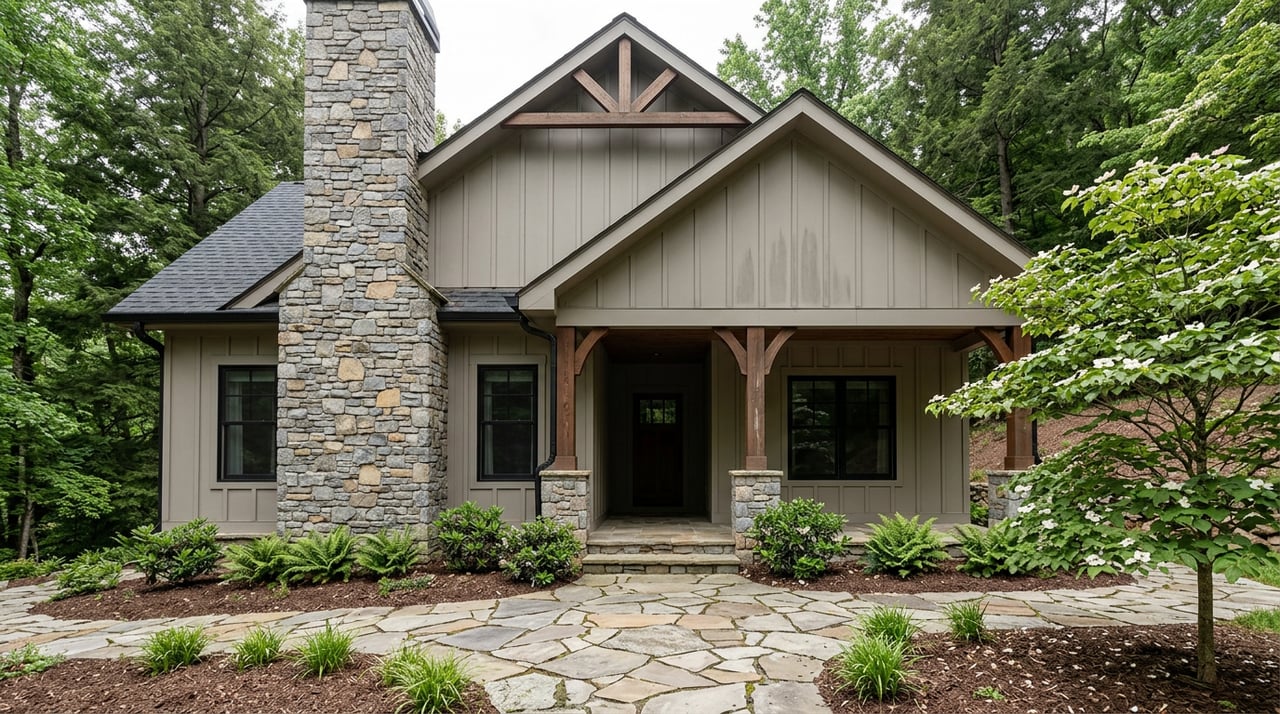
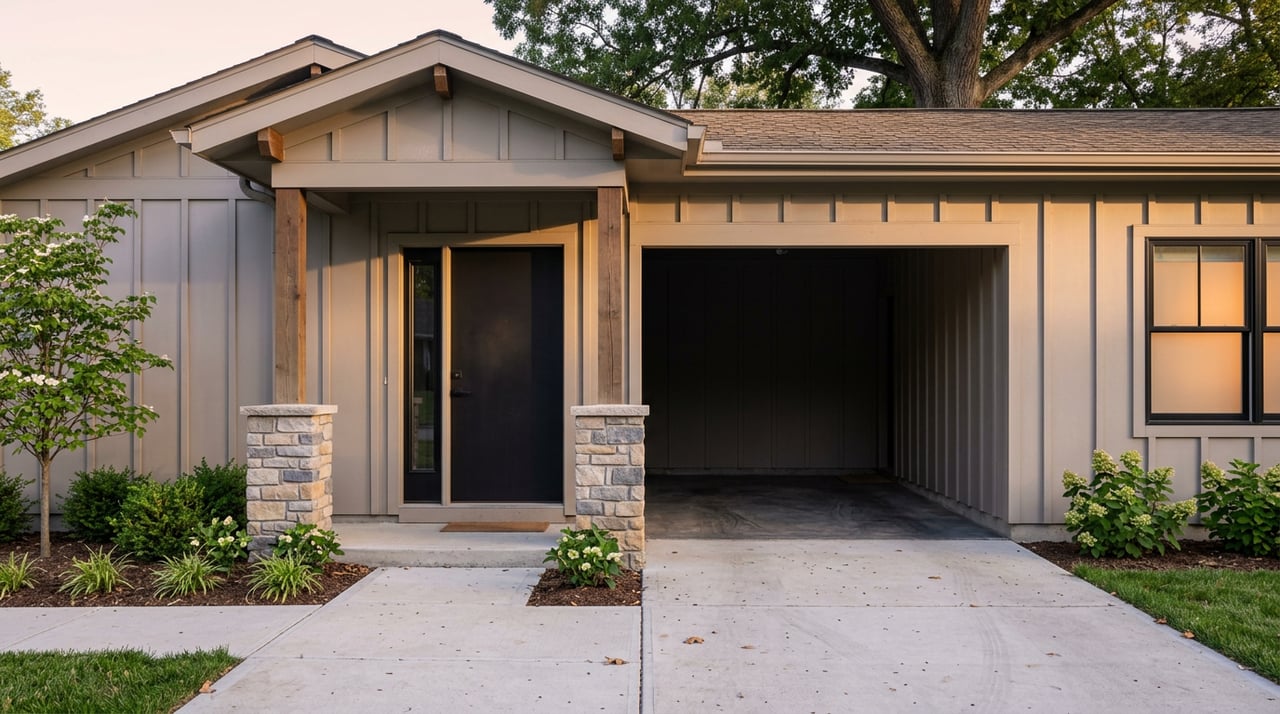
Because so much of the cost equation in Big Canoe comes down to matching a house design to what a specific lot's soil and slope will allow, the builder you choose matters as much as the lot itself. Cane Creek Construction has built in the community since 2001. Mountain Oak Quality Homes, the family-owned firm behind Rob Young Construction, has been building custom homes in Big Canoe and the surrounding North Georgia mountains since 2001 as well. Canoe Custom Homes, led by Matt Barnes, has built a reputation locally for taking on technically difficult sites, including sloped lots requiring new construction tied into existing structures.
Builders who have worked lot after lot in this community carry something a spec sheet cannot: a working memory of which pockets of Big Canoe tend to hit rock, which need engineered systems as a matter of course, and which clear a standard soil test without drama. That knowledge, more than any number on a listing, is what turns a raw lot into an accurate budget.
What This Means Before You Make an Offer
If you are looking at land here with a future build in mind, the lot price should be treated as an entry number, not a budget. Before writing an offer, or at minimum before removing a due diligence contingency, get clarity on three things:
- Has a Level 3 soil test already been completed and passed, or will that fall to you after closing
- What septic system type the soil is likely to require, standard or engineered, and roughly what that gap in system type means for cost
- Whether your intended home design and bedroom count line up with what the lot's soil can support, given the septic sizing rules tied to bedrooms rather than square footage
Owning a lot also carries a monthly holding cost through the POA's mandatory assessments, and those assessments increased again for 2026 following the board's November 2025 budget approval, alongside a rise in the Capital Contribution Fee for new buyers to the maximum allowed under the community's covenants. Land that sits unbuilt for years is not free while it waits.
None of this makes buying land in Big Canoe complicated in a way that should scare off a serious buyer. It means the sign in the yard is only the opening bid in a longer conversation, one that includes a soil engineer, a builder who already knows the terrain, and someone who can walk you through what the POA's current rules actually require before you are emotionally and financially committed to a specific lot.
A Few Questions Worth Asking Directly
Does a "Buildable Lot" designation guarantee a standard septic system? No. It only means the lot has not been officially designated Unbuildable under the community's Declaration. A buildable lot can still require an engineered septic system depending on the soil and water table, which changes the cost significantly even though the lot technically qualifies.
Why does it matter that builders sit on the AECC? The committee interprets the written architectural standards against real building plans. A builder who has served on that committee, or who works closely with the current standards, has direct insight into how setbacks, tree preservation, and material rules get applied in practice, not just what the document says.
Will the AECC review add time before I can break ground? Plan review timelines depend on the scope of your project and how closely your plans already match the current standards, which changed as of January 1, 2026. Building with a local builder who is current on those standards is the most reliable way to avoid delays caused by plan revisions.
If you are weighing a specific lot, or trying to figure out what a piece of land here will actually cost to build on before you make an offer, North GA Properties works through these questions with buyers regularly, alongside the builders who know Big Canoe's terrain best. Start Your Home Search when you are ready to look at what is currently available.